
Backstory
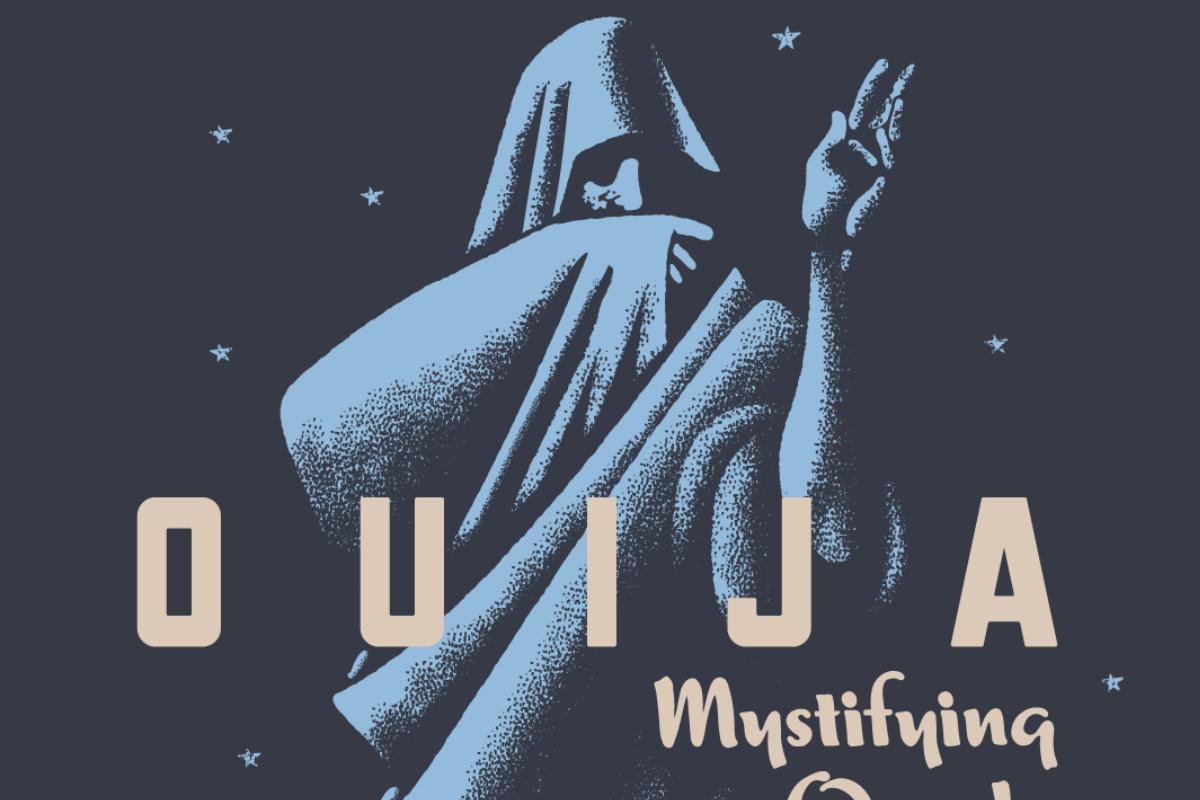
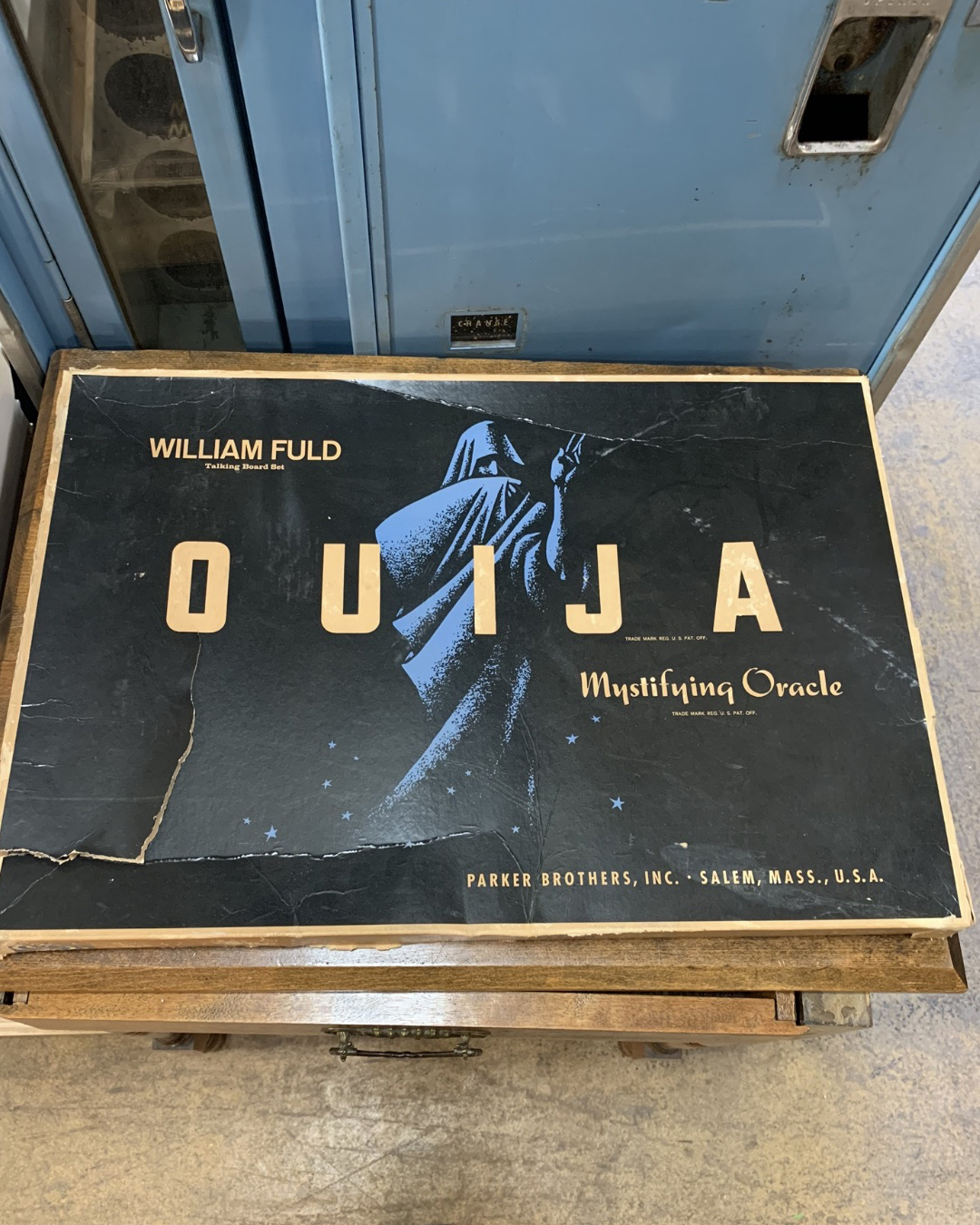
I kept coming across this board game through repeated visits to one of my favorite shops in Milwaukee, a local estate sale warehouse. I’ve always admired its design. Each visit became a struggle to not purchase the board game. But like with a lot of antiques I come across, it was in pretty rough shape, a little musty smelling, and probably haunted. Who knows what or who was summoned with this Ouija board!?!?I really enjoy this three-color print on the box. The large bold Ouija letters seem out of place given it’s mystifying illustration, but yet it works? You would kind of expect the “Mystifying Oracle” font to be used for the main font. Interesting choice, and I’m here for it.
I was searching the internet for this edition of the board game and came across some interesting history behind it:
In 1890, Charles Kennard of Baltimore, Maryland, formed the Kennard Novelty Company with the help of several other investors, including Elijah Bond and William Fuld, to exclusively produce talking boards using the name Ouija board.
As the story goes, in 1891, Bond, accompanied by his sister-in-law Helen Peters, an acclaimed medium, brought the device to the patent office in Washington, D.C. The chief patent officer required him to prove that it worked by spelling out his name—supposedly unknown to Bond and Peters—in order to grant the patent. The two communed with the spirit realm, and to the shock of the patent officer, the Ouija board successfully spelled out his name. The wildly successful Ouija board was then marketed as both an oracle device and amusing parlor game.
Long after William Fuld began making Ouija boards commercially in the 1890s, talking boards remained a favored pastime. Parker Brothers purchased the rights to the Ouija board from the Fuld family in 1967. Ouija board sales soon surpassed those of Monopoly. For more than one hundred and twenty-five years, the talking board has intrigued the public. This exhibition traces the device’s history and features boards from the 1890s to the present. 1
I also discovered that the illustration on the cover was believed to be inspired by the 1909 “Eternal Silence” monument that resides in Chicago’s Graceland Cemetery, which I would end up moving only a few blocks away from when I moved here. I’ve been meaning to visit and take a photo, but you can search for an image online. It’s pretty unmistakable.
The Design
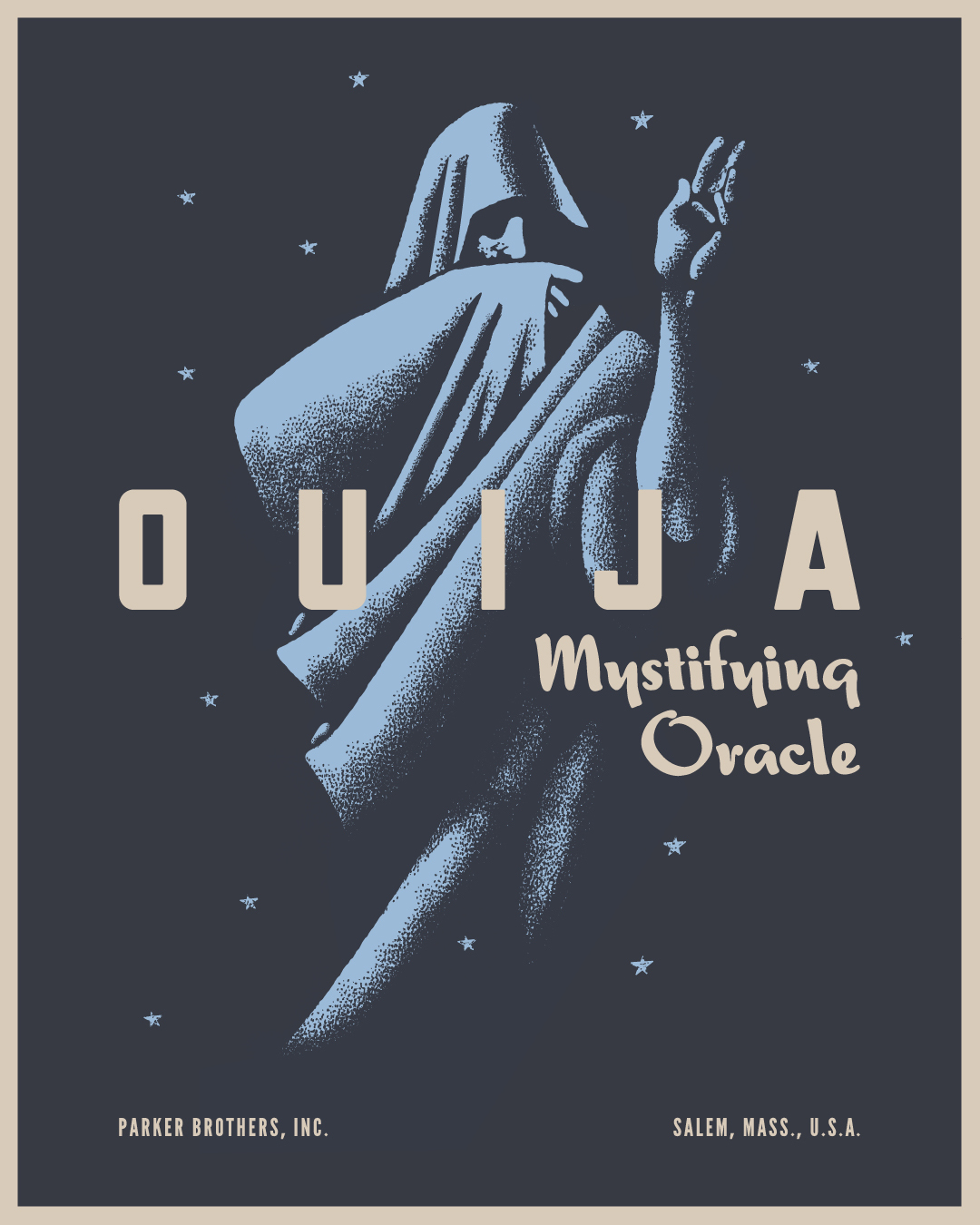
This was a fun one to recreate. The colors, whether original or due to the box’s aging, work so well together. I didn’t spend too much time trying to find the original font used, as with a lot of these a similar bold typeface is used and then tweaked for each application.
The illustration was what I spent the most time on. I created my own stippling brush and worked with layers of the overlapping fabric. I used some rough print effect on the edges. I would be really interested to see how this was created originally. It was probably one of those instances where it was much easier than how I tackled it. And also just actually artistic talent.
Conclusion
Please don't haunt me.1 SFO Museum