
Bench Notes highlights the tools that earn a place on my desk, in my bag, or on my workbench: the ones I use, the ones I like, and occasionally, the ones I don’t.
Montblanc is one of those names that even people outside of the pen world tend to recognize.
Some of their pen models sell for hundreds or even thousands of dollars. You’ll have people tell you they’re some of the best writing instruments you can get your hands on, while others will tell you they’re overpriced plastic junk.
I may have bought someone’s broken plastic junk, but I can assure you it wasn’t for hundreds of dollars. Was it still worth it? That is the question.
Montblanc No. 22
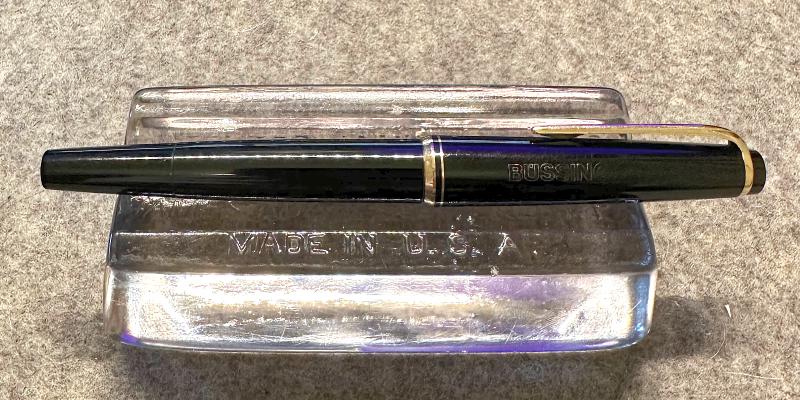
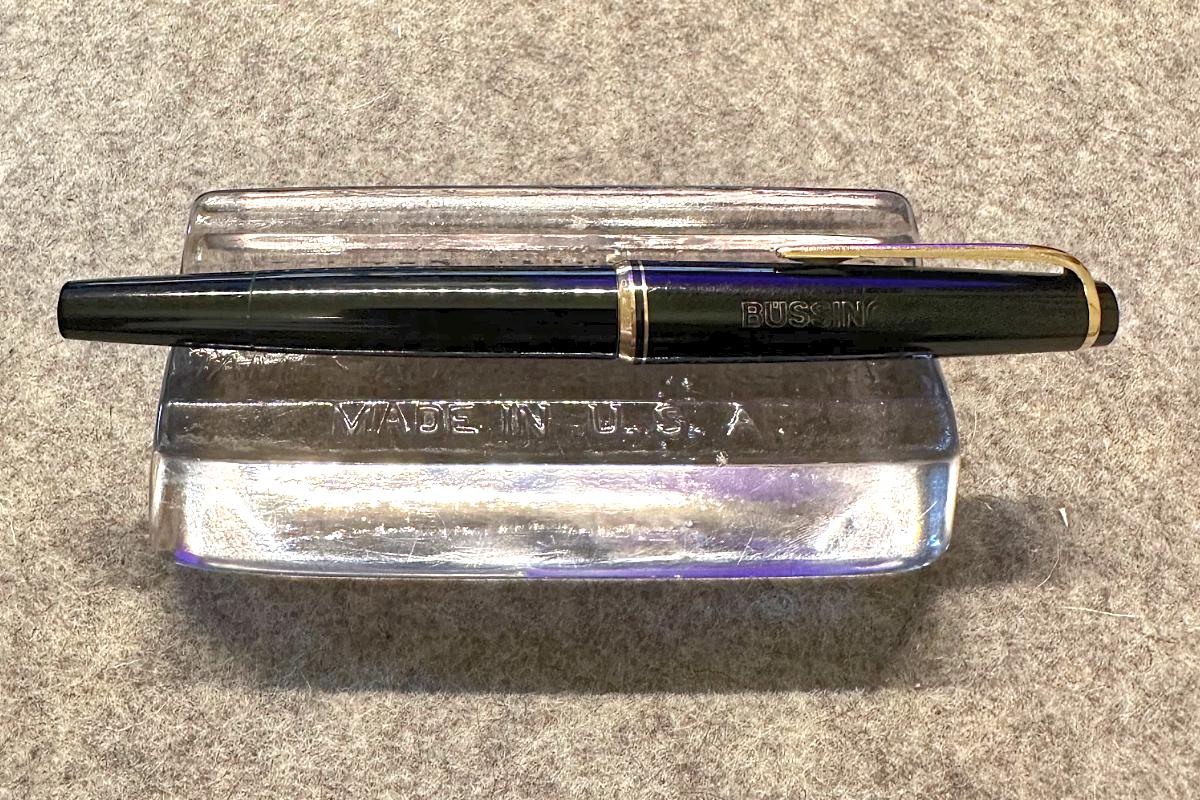
Two years ago, I impulse-bought a Montblanc on eBay. I’m not even sure I got a sweet deal on the pen, but I felt I needed it.
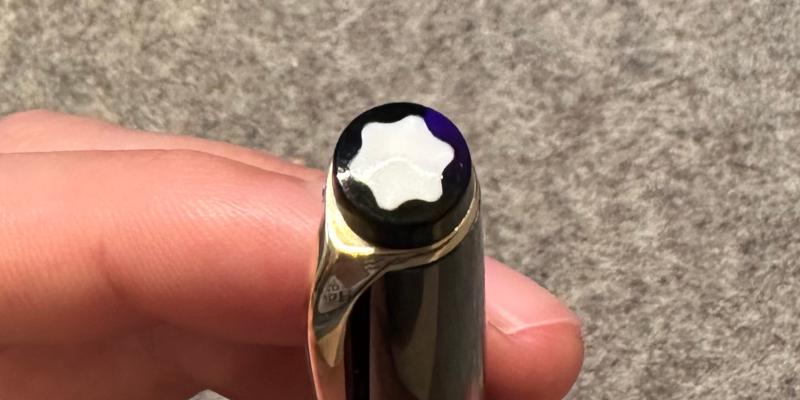
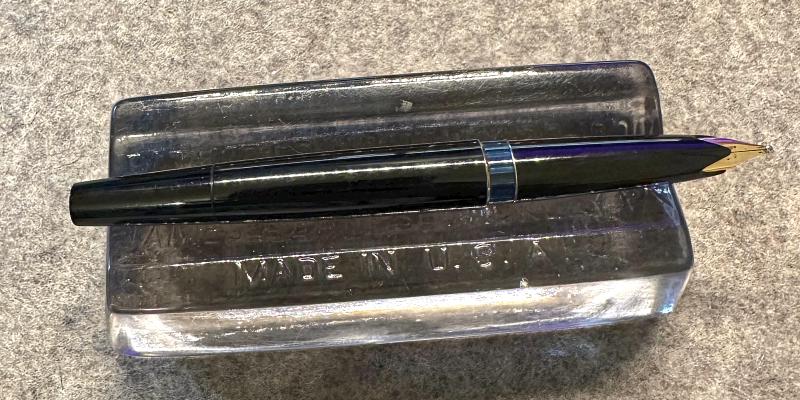
The pen is a Montblanc No. 22, a standard-sized, mid-range, mid-tier fountain pen made sometime between 1960 and 1970. Mine points to it being from the early ’60s. This pen is interesting because it marked a period when Montblanc started to move away from the traditional, clunky look of their pens and started making sleeker, cleaner, more contemporary styles, similar to what we still see today with some pens.
The pen features a 14K gold “winged” or “butterfly” semi-hooded nib, as opposed to the 18K gold nibs found on their higher-end line of pens (Meisterstück). Mine appears to be some sort of stub nib, possibly an oblique broad, which would have had to have been custom ordered. Probably why it wasn’t a heavily contested eBay listing. On top of that, the nib appeared to be bent… another reason why it wasn’t a hot auction.
Another reason it may have easily fallen into my lap was that the barrel had a business name engraved on its side. This usually hurts the value. But I wasn’t looking to resell this pen; I wanted to see what the Montblanc hype was all about.
Other than that, this pen seemed to be in good condition. No dings or cracks, just some light scratches all over. I’m sure they could be polished out, but I don’t really mind at this point. The piston-filling mechanism also seemed to work just fine, which was a big sigh of relief. That’s out of my wheelhouse when it comes to fixing.
One cool feature of this pen is the faceted, translucent blue ink window built into the section. It catches the light almost like panes of blue stained glass.
The Restoration
Surprisingly, and thankfully, there was little work that needed to be done to consider this “restored.” The nib obviously needed tuning. That was 99% of the work. The other 1% was just cleaning it out. Which wasn’t difficult at all. The piston filling mechanism was clean and working great. You wouldn’t begin to guess this pen was made in the 60’s.
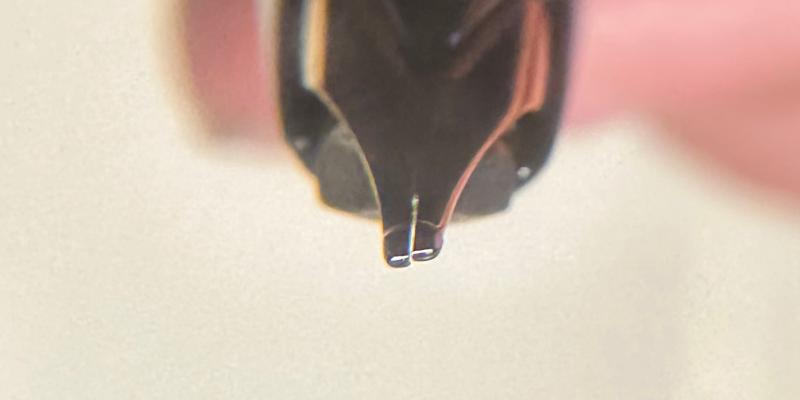
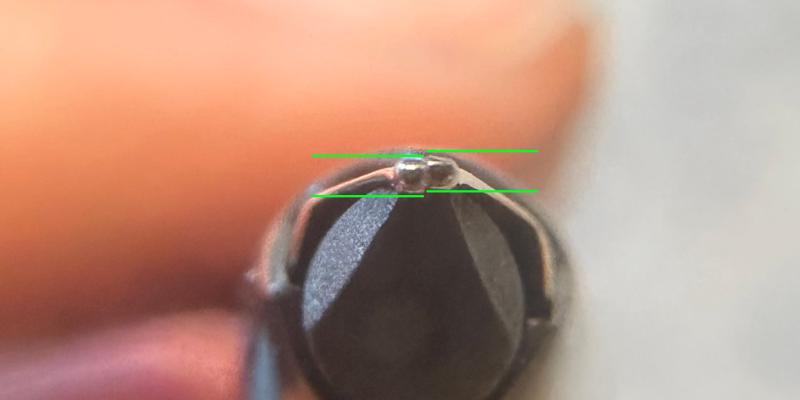
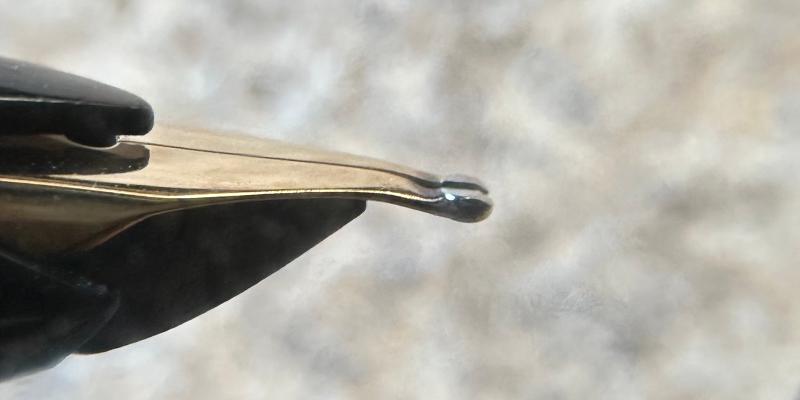
I got the nib bent back and tuned as best as I could. I would say it’s at about 95% realignment. It took me almost an hour to get it to where it’s at. Tiny adjustment after tiny adjustment with my finger nails. Gold nibs are still pretty soft compared to stainless steel, and on top of that, this nib seems to have more flexibility than what I’m used to, so taking it slow was a must.
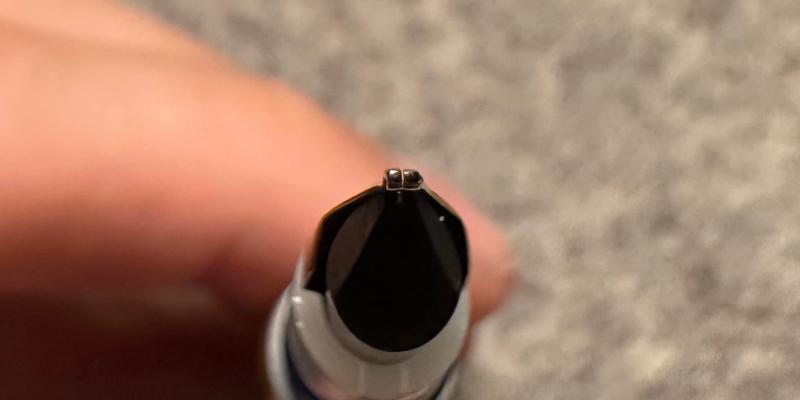
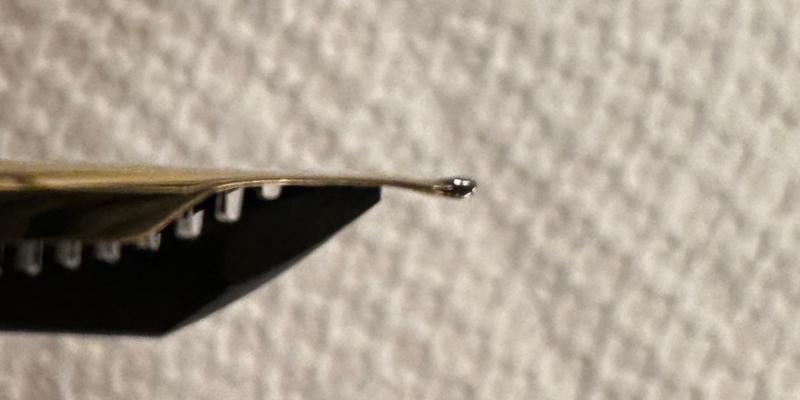
Some light polishing with a jeweler’s cloth and a microfiber cloth got the entire pen body shining to my satisfaction. The nib cleaned up well and shined to a mirror finish with the cloths.
The Result
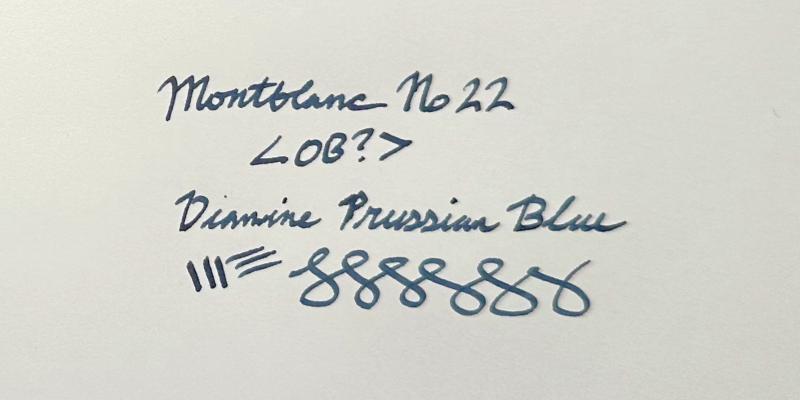
After a polish and cleaning, I inked it up with some Diamine Prussian Blue. The first few lines of writing were THICK. Like, way too thick. I thought maybe the feed was just oversaturated from dipping it into the ink, but even after a page of writing, it was still thick. But I think that’s the design of the nib… It’s clearly some sort of stub/oblique nib, and on top of that, either an oblique broad or even double broad.
Unfortunately, I tend to write small. Way smaller than what this nib can do. When this pen is writing across two lines, it shines. But when am I ever writing that big?
It’s possible the nib needs to be tuned better, and that could fix some of the ink flow problems, but as I examine the nib and how it flexes on paper, I think this is just what it does.
However, when writing large, there is a wide range of line variation that is rather beautiful. It takes a certain hand angle to get the most out of it, something I struggle with since I am new to writing with it. But you definitely notice when you hit that sweet spot in how you hold the pen and how your writing transforms into something more calligraphy-like.
Where does this fit in my collection?
I don’t know… I like the pen and how it feels in my hand. I want it to be a pen I write with frequently. But when I write notes and journal, I do so at a much smaller size. Even a 1.1mm stub nib is at my limit for how much ink goes onto the paper.
With that said, I might just leave it inked up for the time being. I do have some projects I’m working on where I would be writing large titles on a piece of paper, so maybe I use this for that and call it a day.
If I ever come across another No. 22, say, with a broken body and an intact nib somewhere on the F, EF, or M spectrum, I might jump on it and swap the nibs.
Conclusion
I’m glad I was able to get this pen up and running. Maybe I’ll revisit the nib in the future and see if there’s any more tuning I can do with different tools. But it writes in its current state, just large. Larger than what I use on the daily. It’s a great-looking pen, and it feels great in the hand, but with its current nib, I don’t think I will refill it with ink any time soon after it runs out.